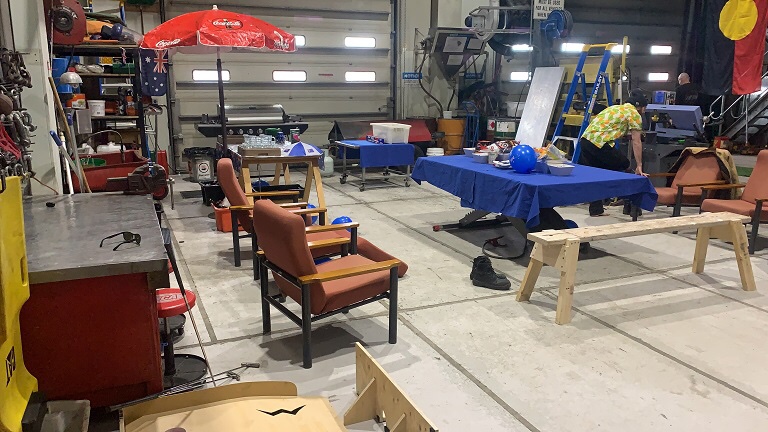
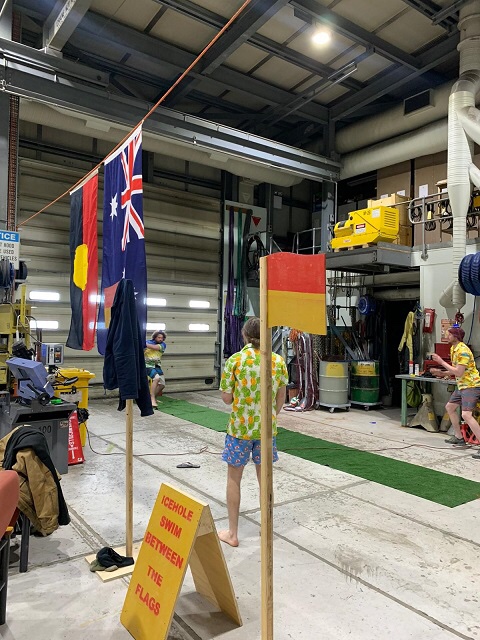
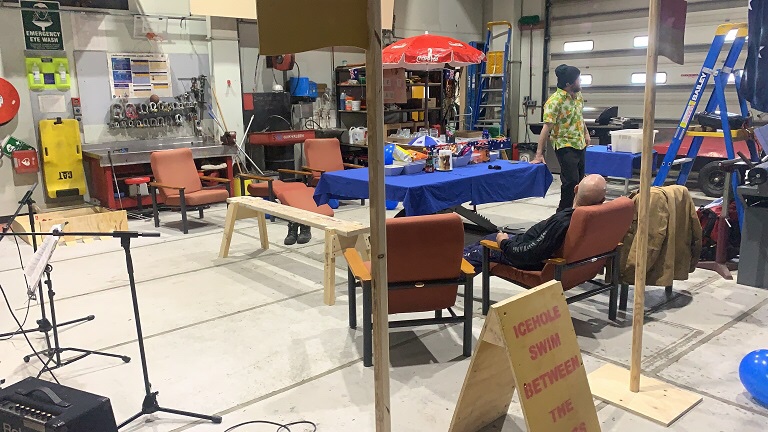
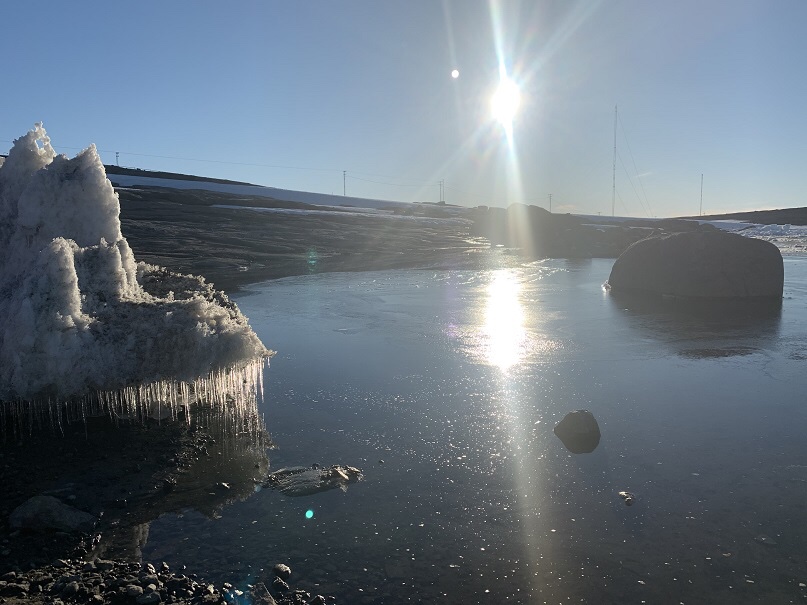
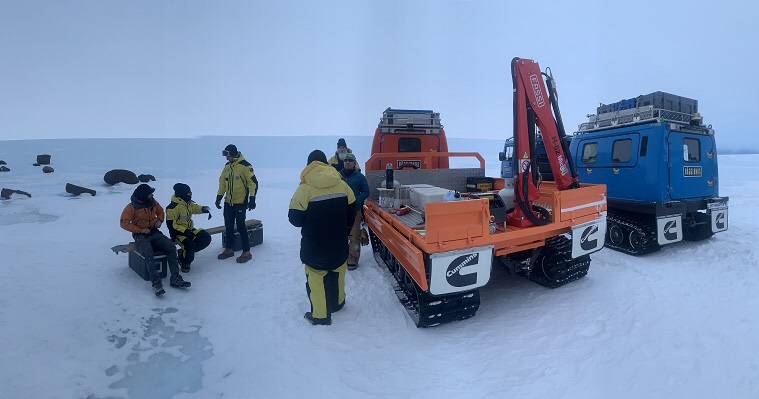
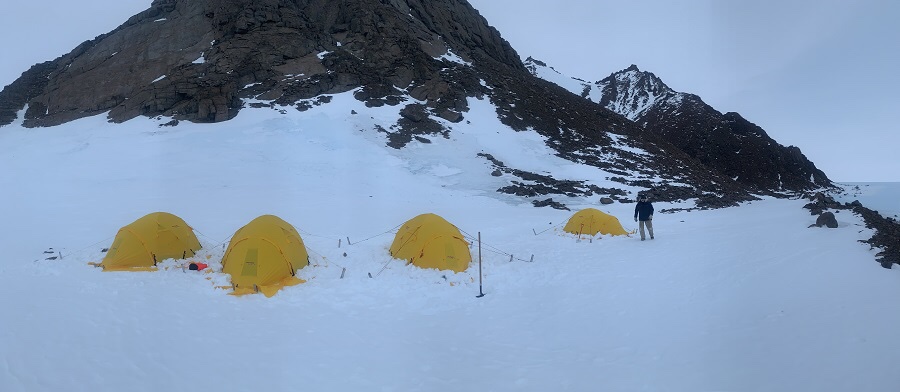
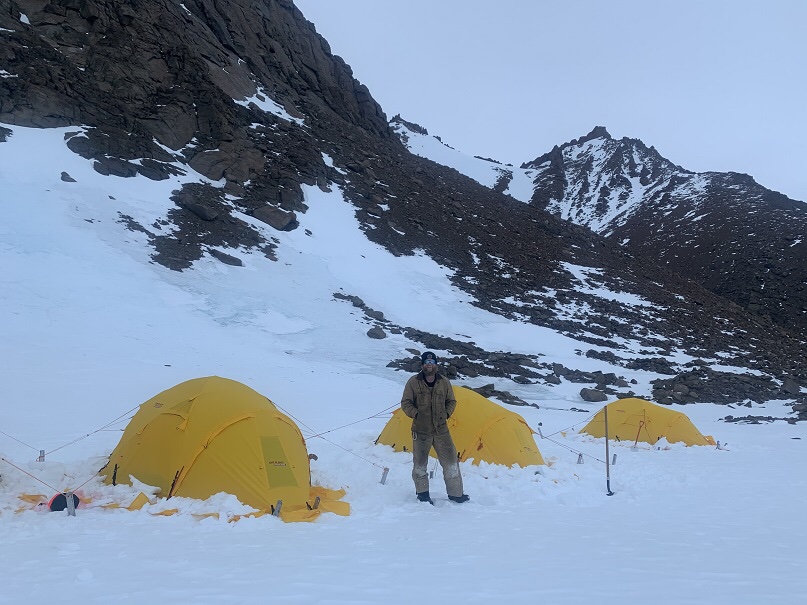
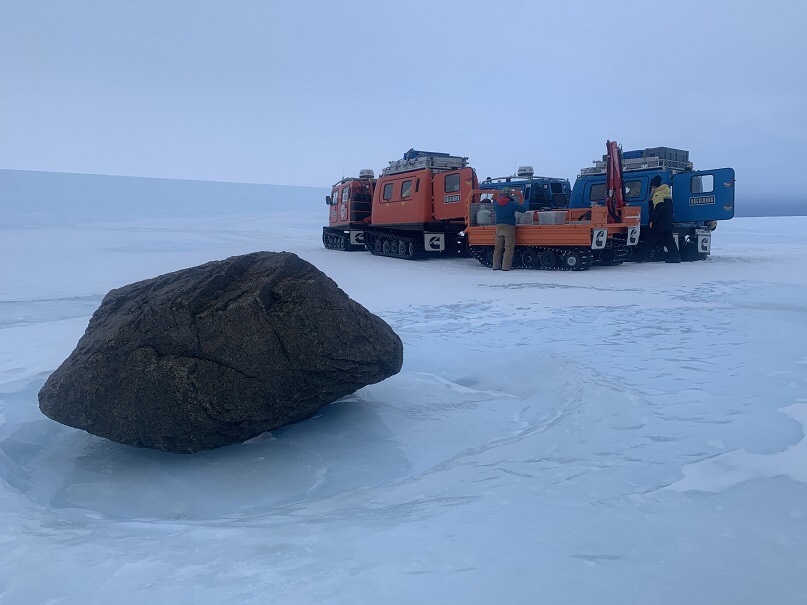
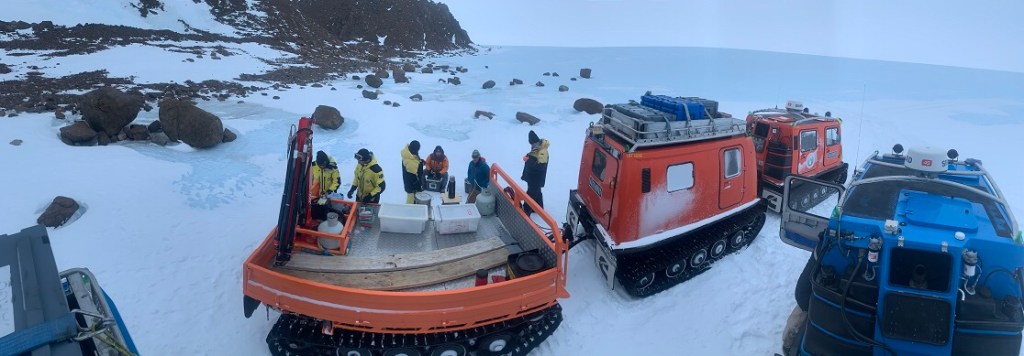
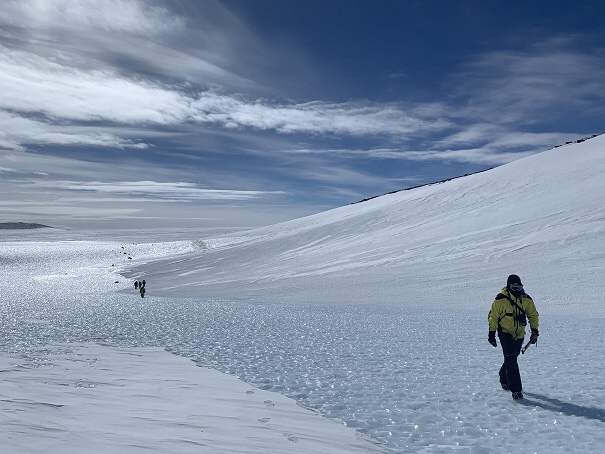
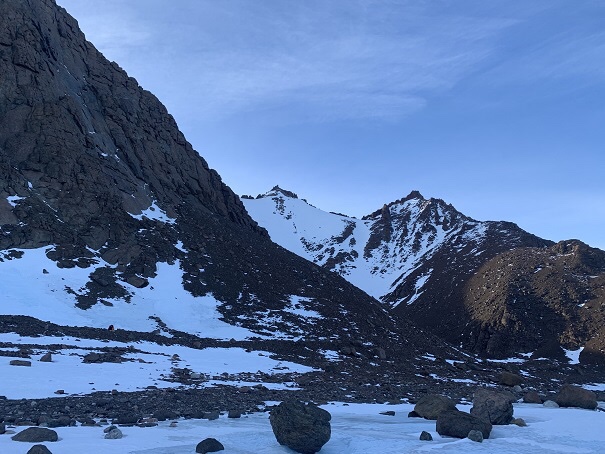
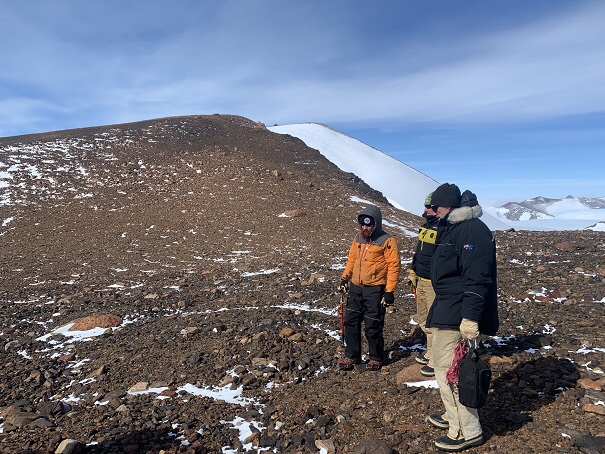
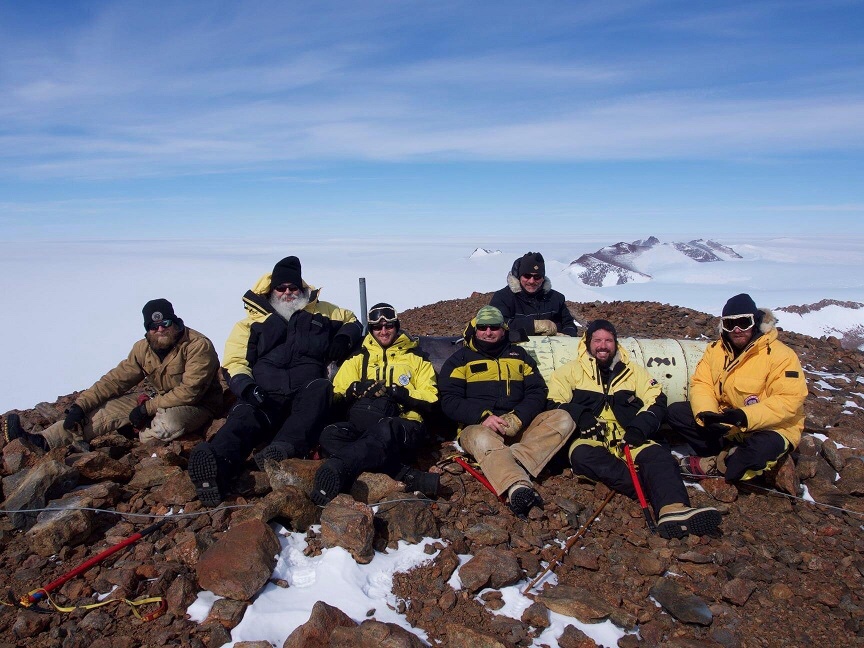
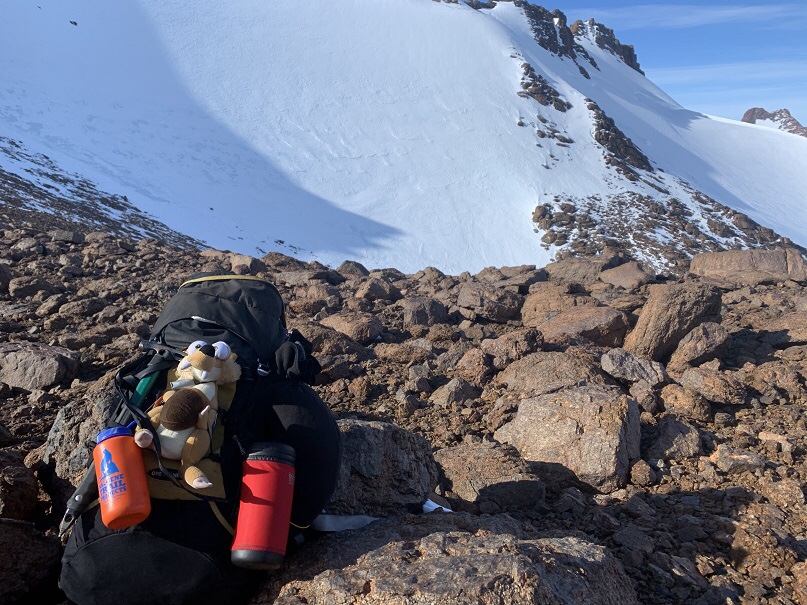
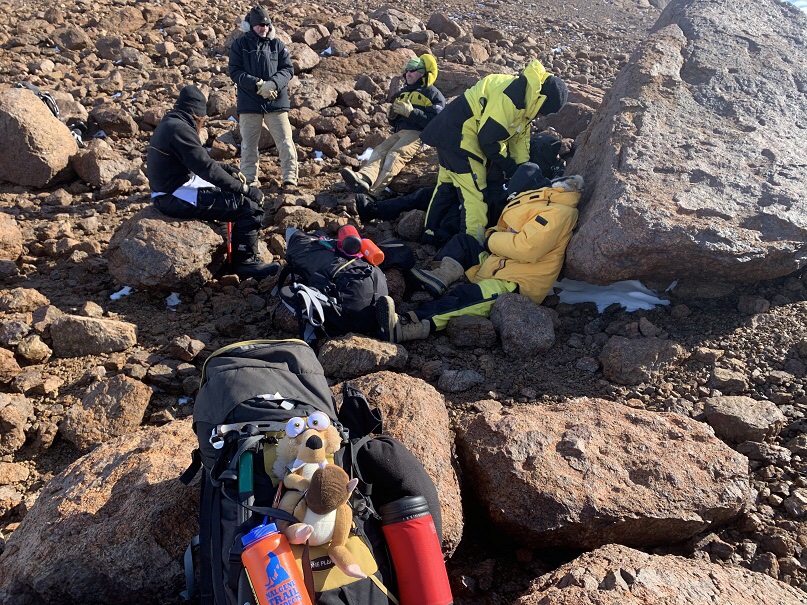
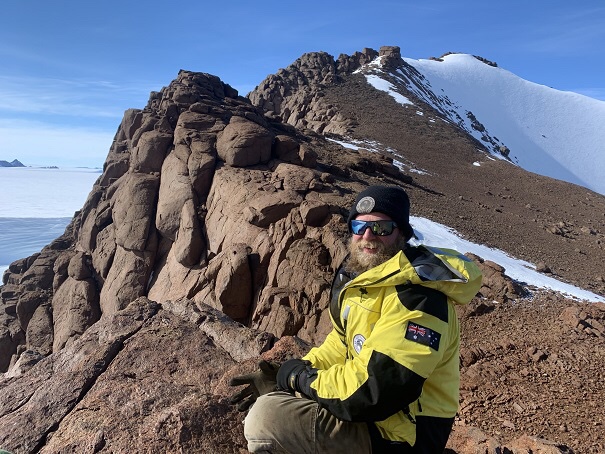
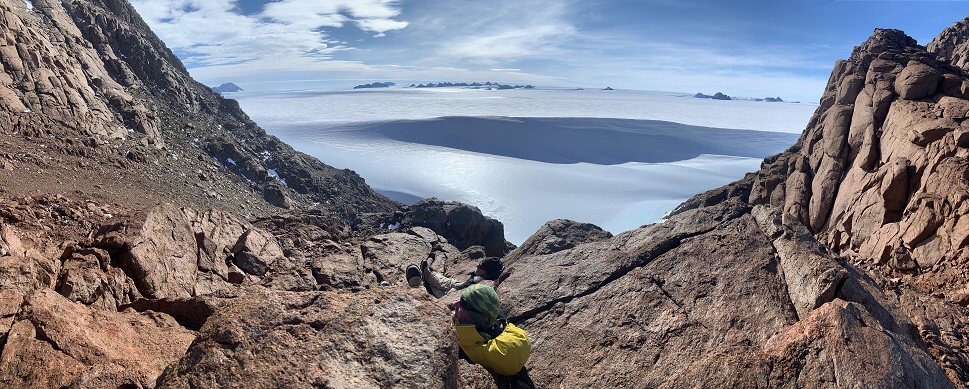
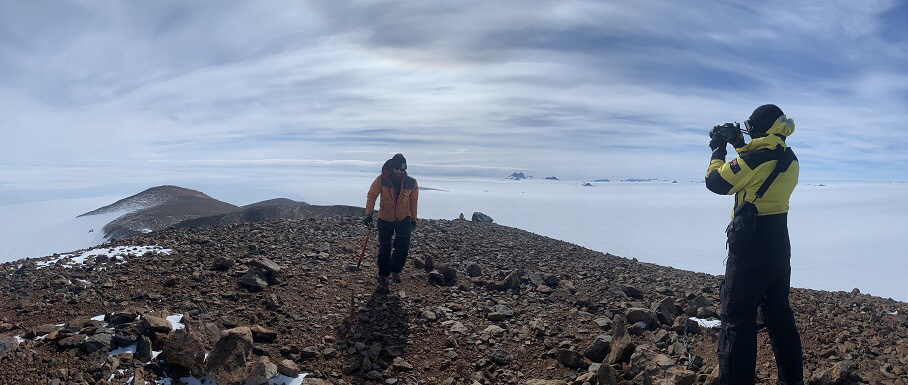
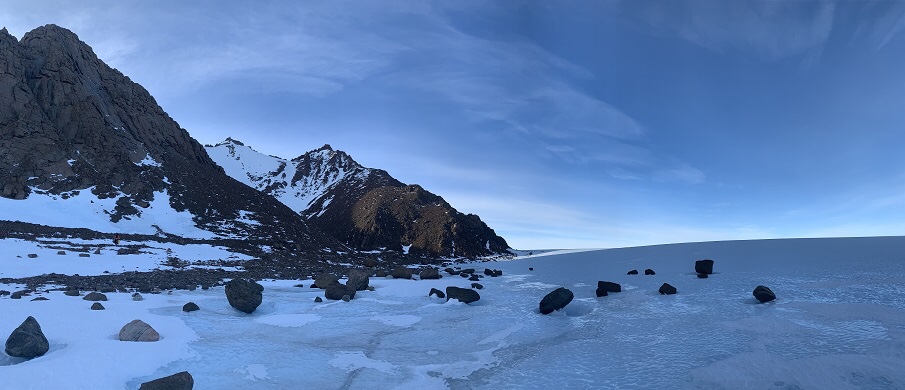
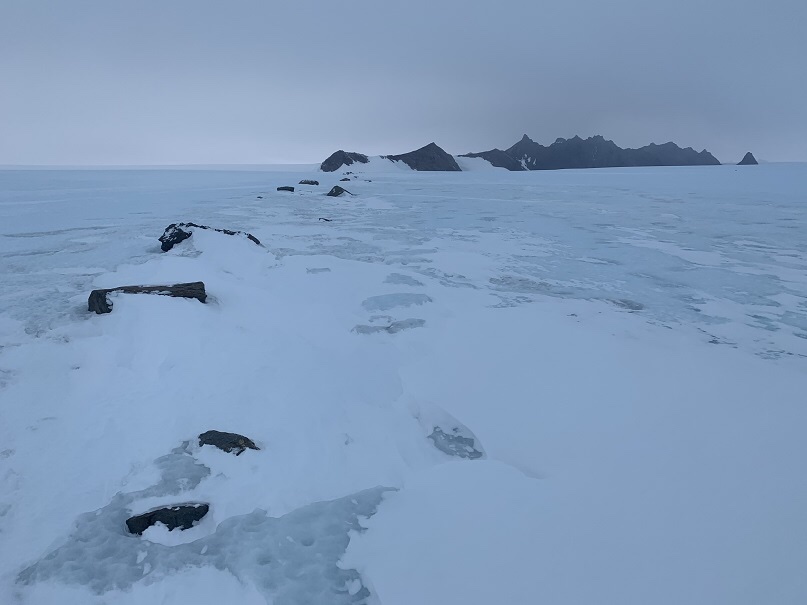
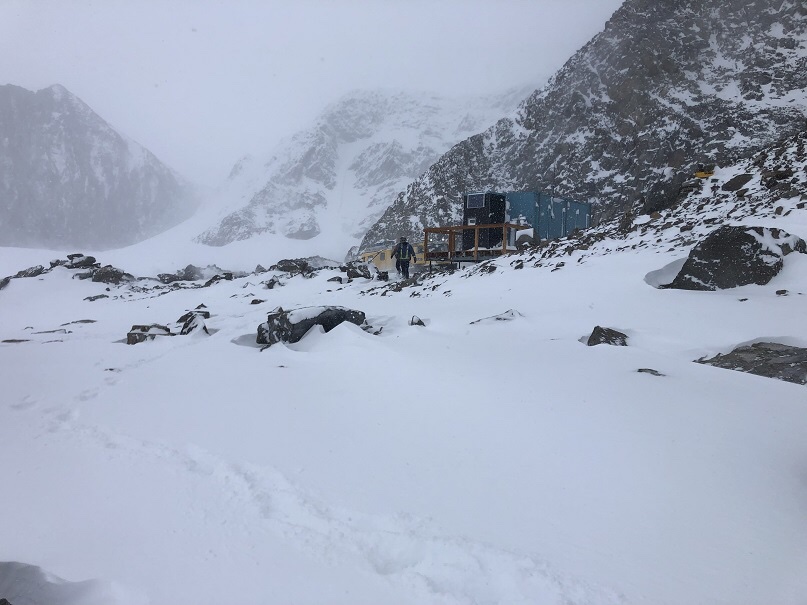
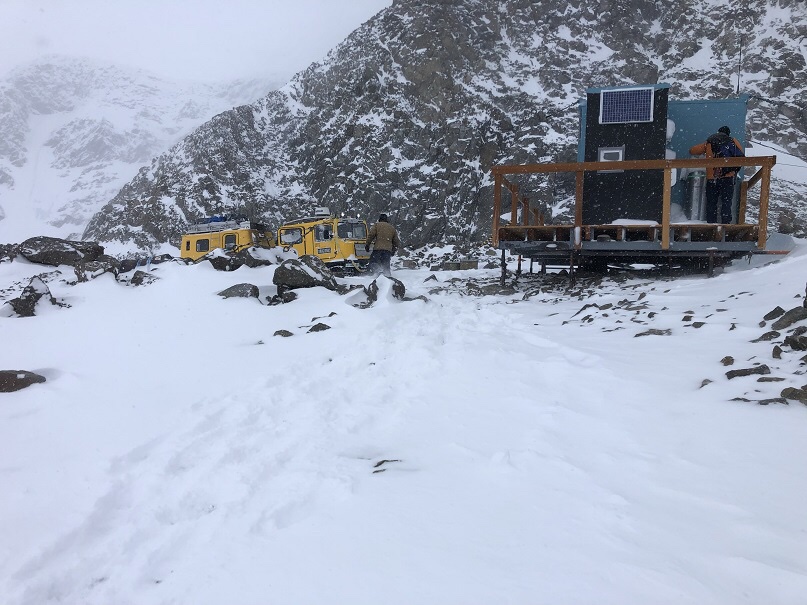
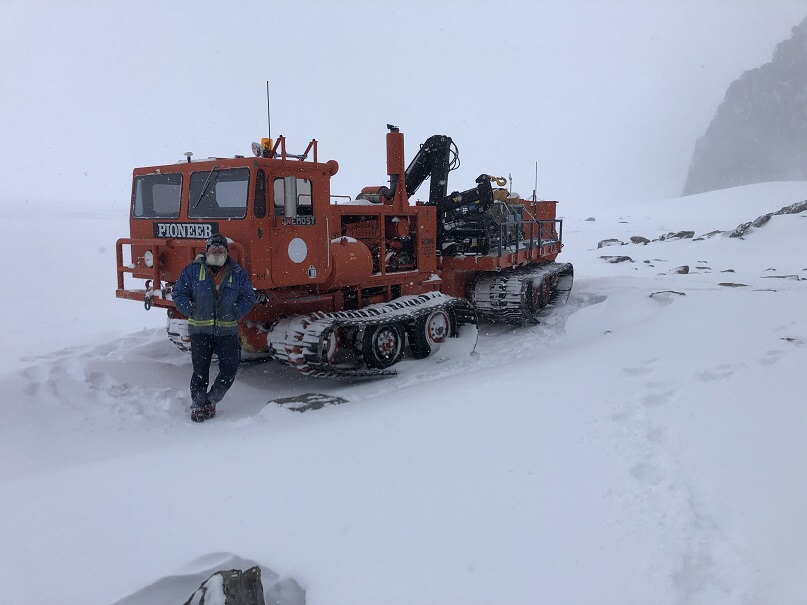
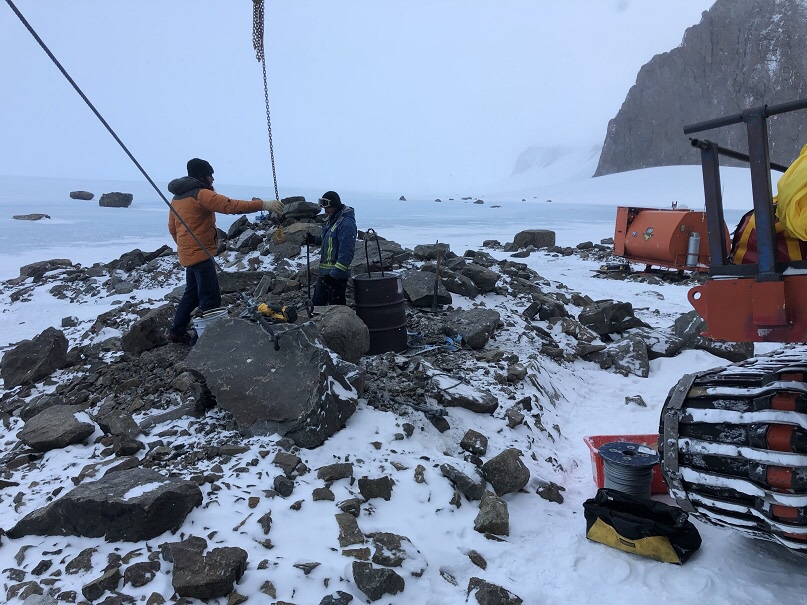
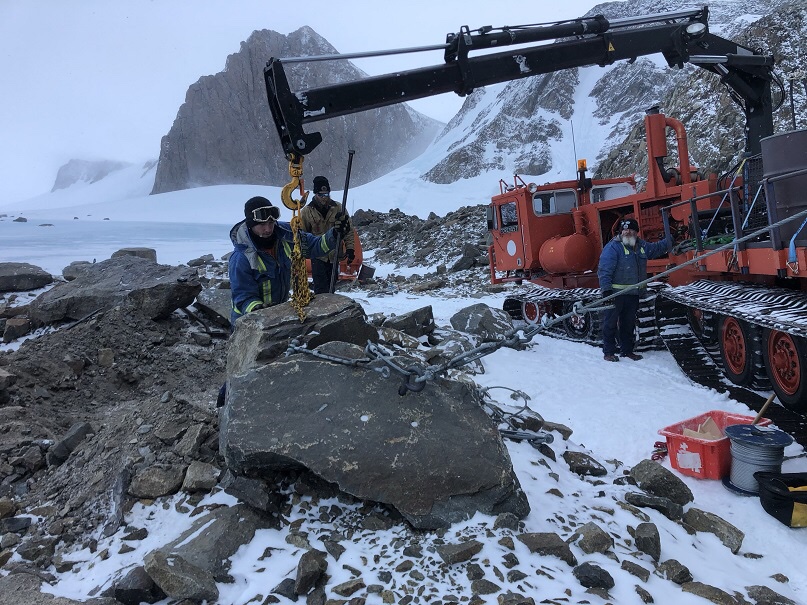
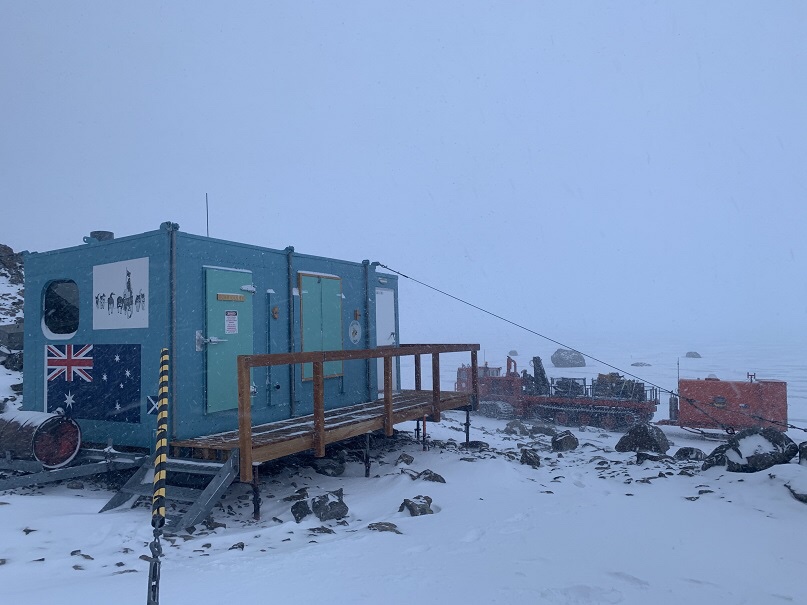
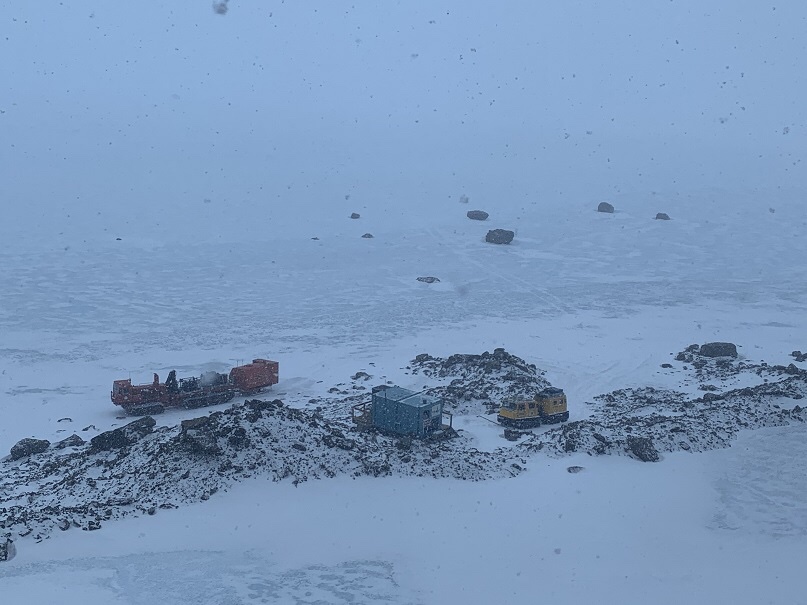
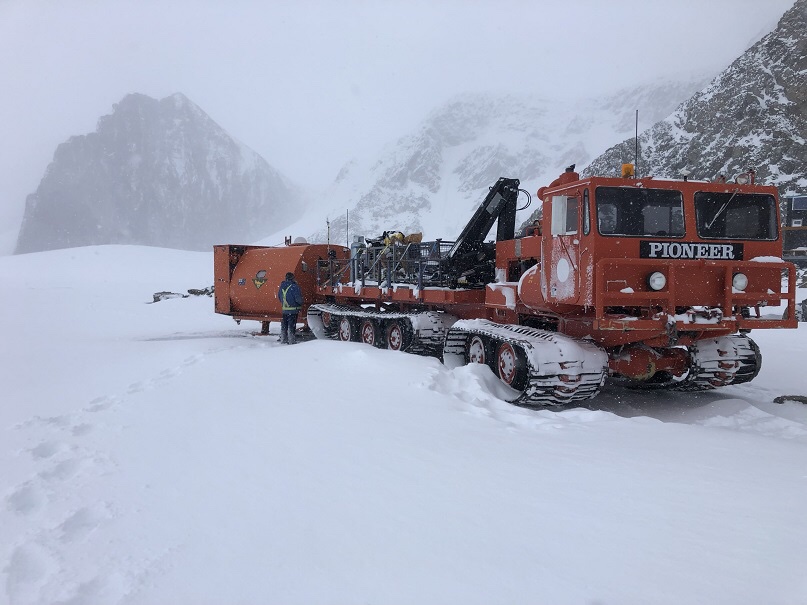
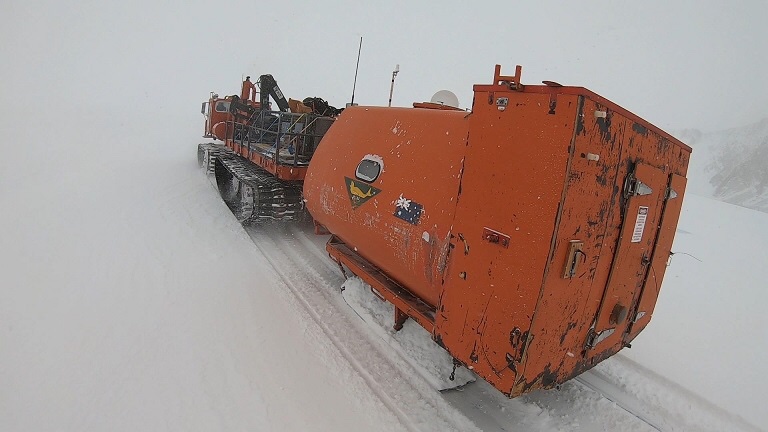
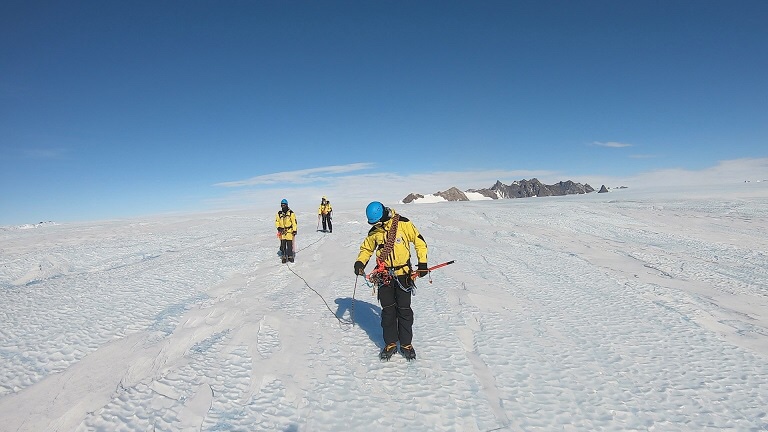
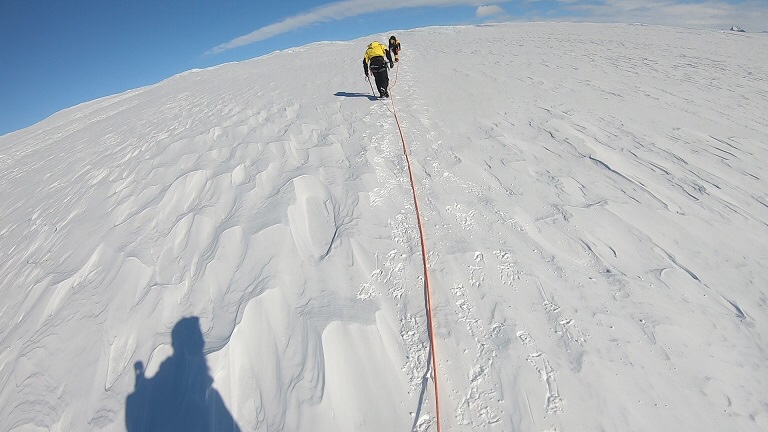
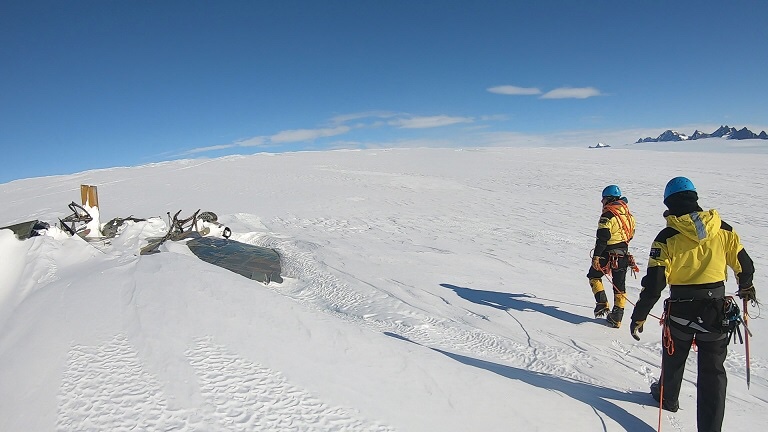
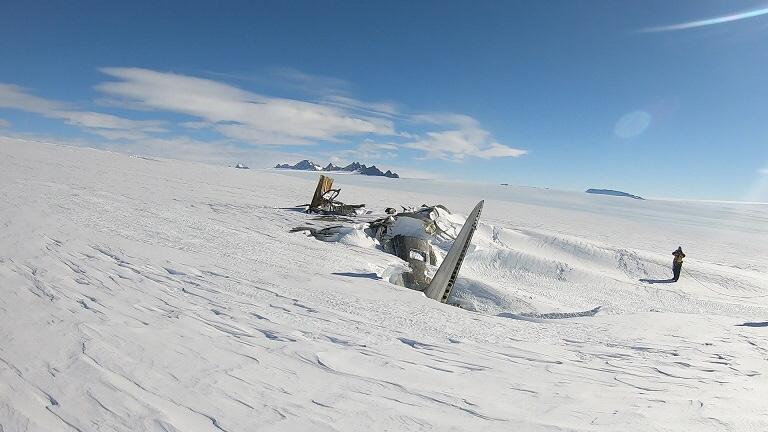
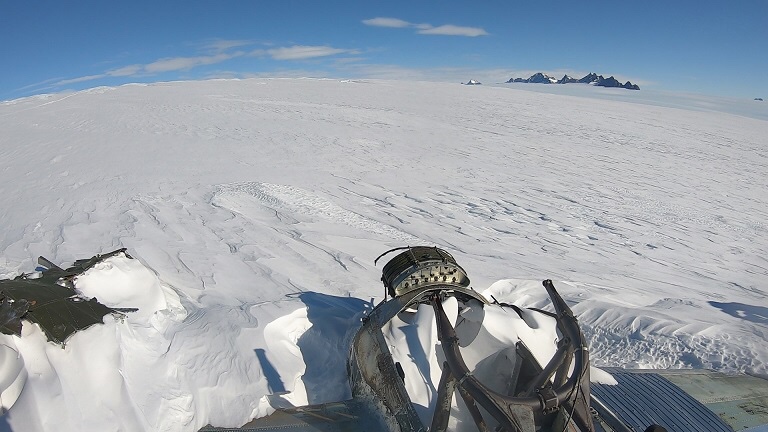
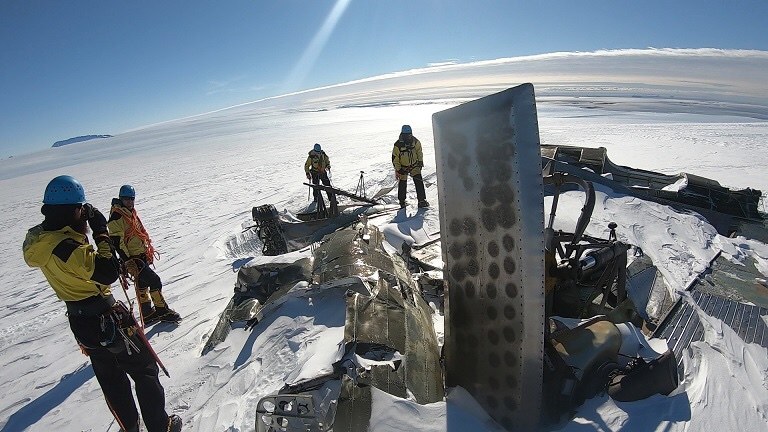
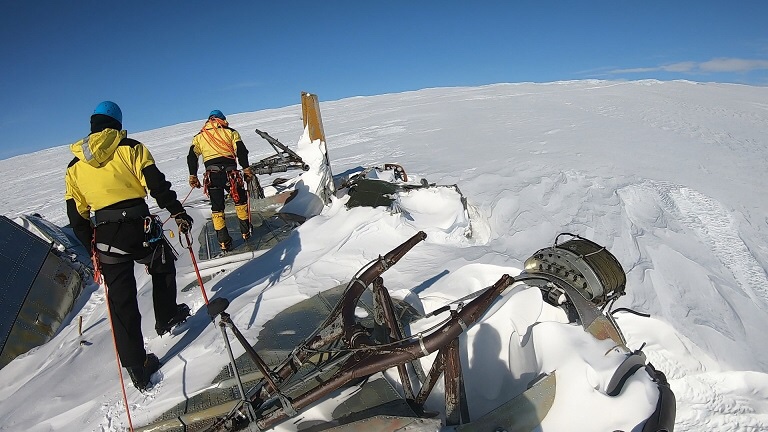
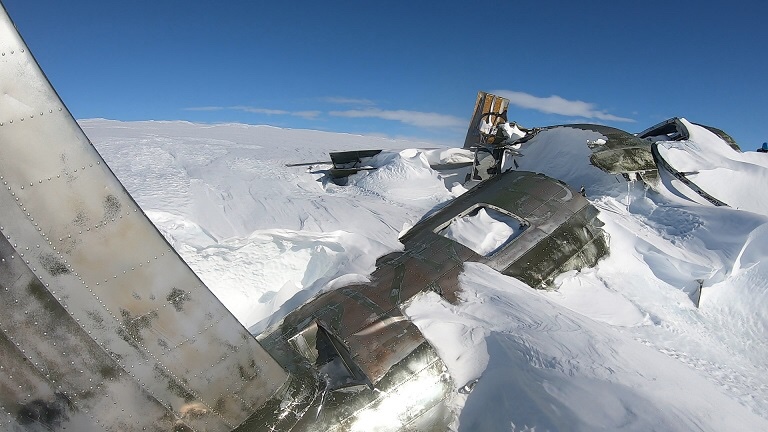
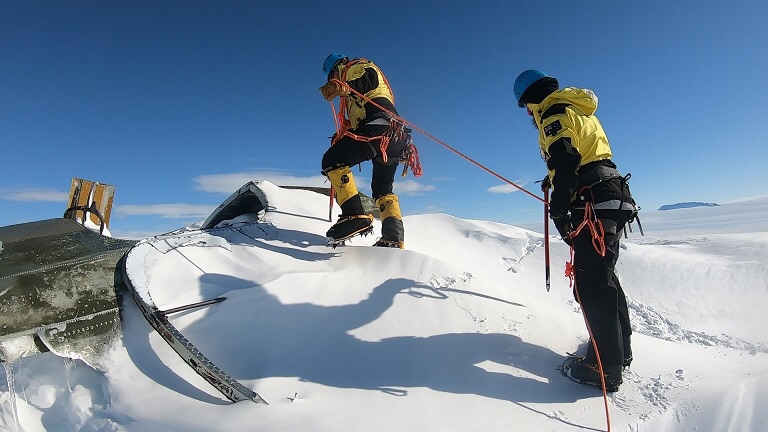
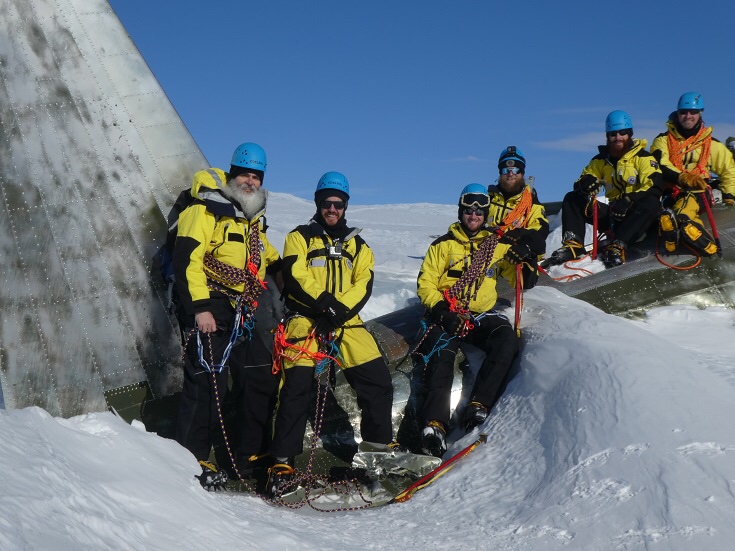
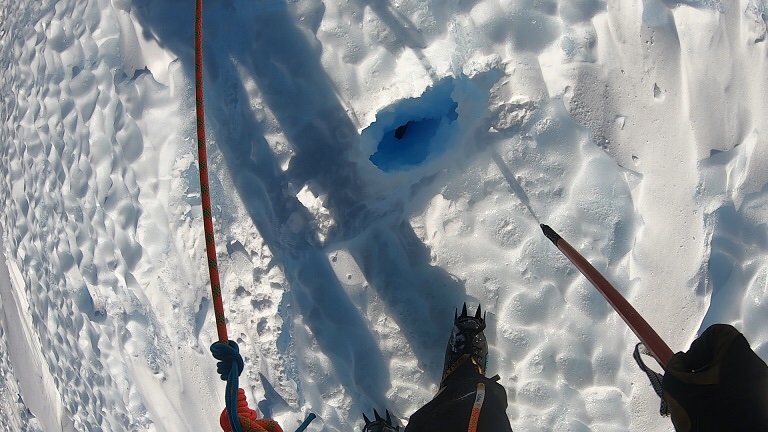
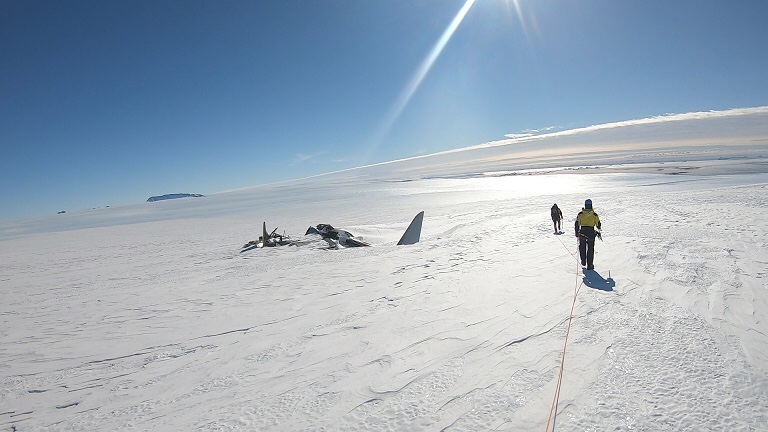
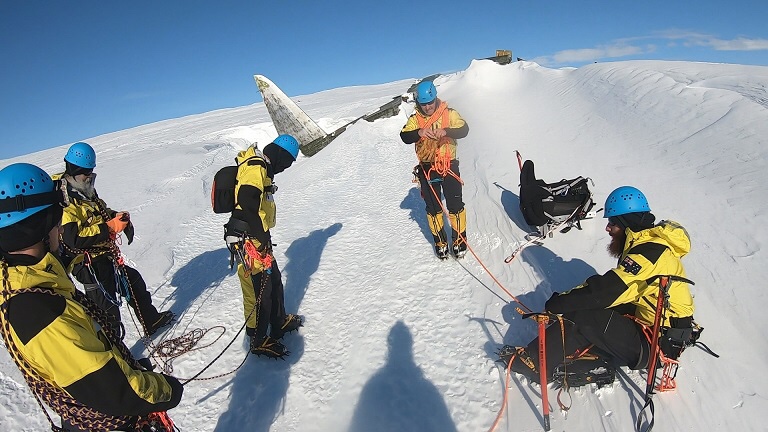
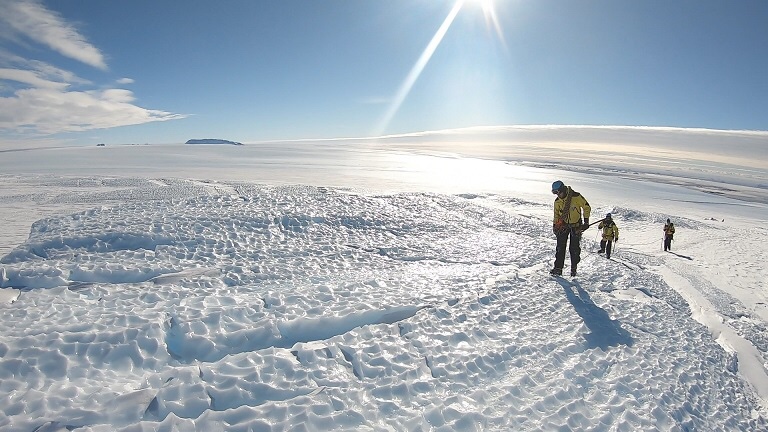
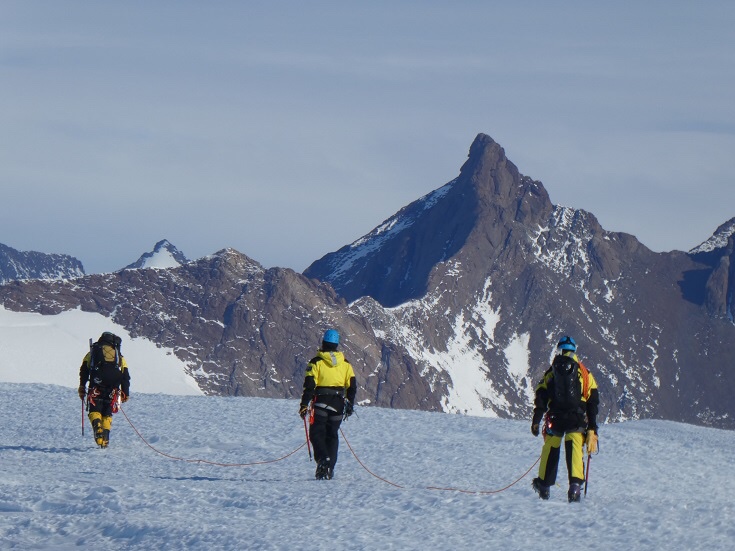
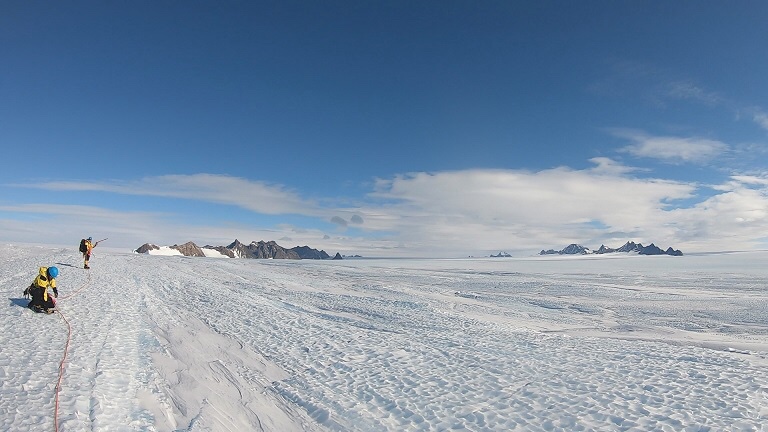
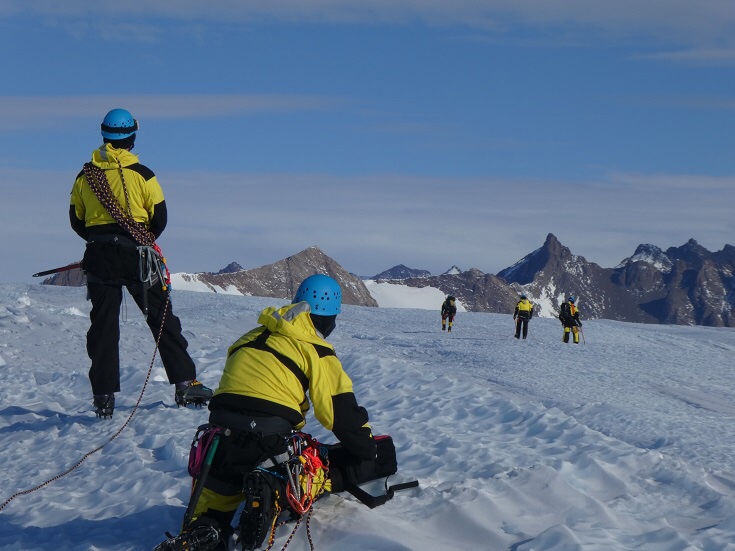
Now we are well into the new year the end is fast approaching, but we have been making good use of the time we have left. Australia Day was a nice celebration as we transferred the work shop into a makeshift beach holiday location. We played cricket, mini golf, had a kick of the footy as well as a BBQ lunch and had our portable spa set up outside which is a lovely novelty. I did have a bit of a laugh at the time as I realised how acclimatised I have become to the cold as I found I was perfectly comfortable jumping out of the spa and walking over to the power house to do Obs wearing just shorts and thongs and casually making the 100m walk over to the powerhouse. Though I suppose it was a barmy +3 degrees at the time. I have also been involved in a trip out to Mt Hordern. Just outside the station operating limits and a four-hour hagg drive away, we needed specific approval from Kingston to be allowed to go on the trip. Eight of us went, the first day of the trip was just getting there and then we set up camp in the shadow of the mountain we intended to climb. The second day the weather was forecast to be not ideal for climbing so we went off in search of a possible old fuel cache marked out there used from when they used to operate an air field in that area. We found where the air strip used to be and the spot they would have left fuel but there were no fuel drums. We walked up to the top of the mountain which was actually just a very steady walk but the summit was a higher elevation than Mt Horden. The view from the top was pretty speccy and gave us a whole new perspective of the area. We intended to climb Horden the following day, we packed up camp and drove around to the base where we would start our climb. Pretty much all the mountains down here are covered in scree sloap on the sides, which is basically small, broken, loose rock which can make walking up them a bit trickier as you try to keep steady footing and not have all the rock slide out from under your feet. Also the winds were gusting pretty high so it did add to the challenge as we were making our way up a strong gust would come and hit while we would hang on to keep our footing and not tip over and start tumbling down the hill as our field packs made us quite top heavy. We made it up to the saddle between the two peaks there was a flattened area we could take a rest and we had planned to sit there and wait for the winds to drop before attempting to continue up further. We sat up there for almost two hours, either huddled together sheltered behind large rocks or making our way over to the other side of the clearing to sit in the sun and look at the amazing view. Unfortunately, the winds did not really drop enough for us to think it would be safe to continue to the summit and with still a four-hour hagg drive home we decided to make our way back down and begin the journey home. Was unfortunate to not make it to the summit but a couple days off station, especially camping out in tents down here is always a great experience. A couple weeks after this I took a group out to Rum Hut to retrieve a portable RMIT (Royal Melbourne Institute of Technology) Hut to bring back to station for some repairs and so next year’s crew can use it for a couple projects they may have on. I had been looking forward to doing this trip most of the year because it offered a chance to take the pioneer out for a drive on the plateau. In the couple days before heading out on this trip Dave (our plant operator) and myself went out to collect some old fuel drums and empty drums that used to be used as waypoint markers. We stopped at Rum just to drill the melt lake in front of the hut just be sure the ice was good enough to get the pioneer across without breaking through. I have been trying very hard to stay off the ‘Wall of Shame’, a wall in the bar with photos of hagg breakthroughs and other operating mishaps. Five of us went out to collect the hut, taking one hagg and the Pioneer, visibility was pretty low so the trip was very slow but we arrived with no issue. The two chippies on the trip also had to correct some of the main hut anchors and the hut itself had been shifted by strong winds. The plan was to use the anchors holding down the RMIT to strengthen the hut, we used the crane on the pioneer to move the concrete anchors and then place them so the chippes could add them to the hut supports. That all went pretty smoothly. Next we had to pull the RMIT backwards, turn it around and then connect it to the Pioneer. This did not go quite as smoothly as I had planned. The hut was a lot more ‘back-heavy’ than I had anticipated and kept wanting to tip over. Thankfully with a good bit of team work and brainstorming (and no small amount of “oh please don’t let this go bad”) we were able to get the hut out and hooked up ready to transport the next day. I was pretty happy to chill out, have a couple beers and dinner after all this. Even though we had low surface and horizon definition, all though this job we had big, fat, steady snowfall which was actually really nice and definitely gave off some real ‘working in Antarctica’ vibes. Transporting it all back the next day all went pretty smoothly and everyone seemed to enjoy the trip – it certainly was one of my favourites. The latest trip was heading out to see the wreckage of an old Russian air craft. It never actually crashed – in the 50’s it tried to take off from the plateau but one of the skids broke through some crust in the ice, damaged the plane and was unable to take off. Before it could be repaired a storm came through and flipped it over, further damaging the plane. It was then abandoned and is now slowly travelling with the glacier out to sea. It used to be in a very safe area but now as it continues to travel it has moved into a crevasse field. So, to head out there we had to do a bit of a crash course in glacier travel and those of us in SAR (Search and Rescue) team had to go first and do a slightly more intensive bit of training before groups could start heading out there. We practiced roping up and rescuing each other here on station before going out. There was six of us in the first group so we roped up in two groups of three and it was about an 800m walk from where we left the haggs to the air craft. There were visible cracks around us mostly filled with a layer filled with snow and mostly not big enough to fit a person down but that still didn’t stop a small sudden moment of panic at times where you could hear a change in note in the snow and ice under foot. It was the perfect day for it, clear skies and barely any wind. We hung out there at the air craft for almost an hour, climbing over it and inspecting as much of it as we could that wasn’t currently buried in snow. The journey back we took a little more time, enjoying the opportunity to stick our head down the odd crevasse and the view of looking back towards the mountains.
Apart from that, all eyes are fixed on resupply and the return voyage back to Hobart. Last weekend we had our End-Of-Season dinner, before which I Premiered the movie I have been making of our year which everyone seemed to enjoy. We are all busy cleaning up our work places and getting everything ready to handover to and welcome the incoming crew. We have one week left of field travel so hopefully the weather will allow us to make use of it. The Ship left Hobart on the 10th of February and is now only 2 or 3 days away from Davis Station where it will spend 10 days resupplying them before travelling here to Mawson. It is only now as I write this, I am realising the ship will be here and our own resupply will be beginning in about two and a half weeks. In perhaps just over one month I will be beginning the journey home. It will be sad to see this adventure come to an end but I am very much looking forward to catching up with many of you when I get back.
 Guy's Antarctica Adventure 2020